
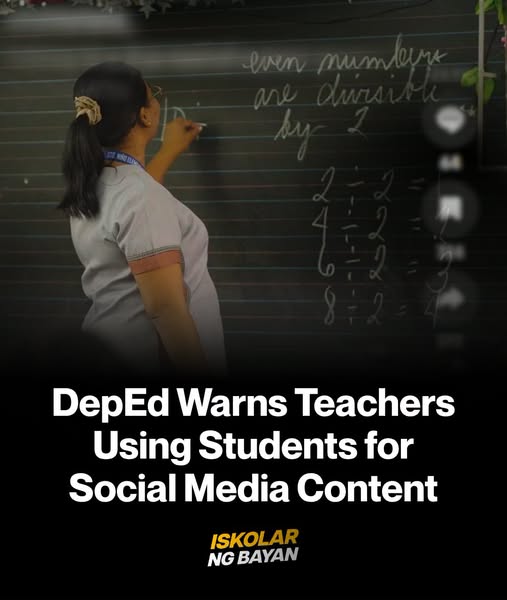

The intersection of modern content creation and institutional duty has reached a critical turning point in Philippine education. The Department of Education (DepEd) recently issued a firm reminder to teachers: personal social media accounts do not exempt educators from the ethical standards of their profession, particularly regarding the use of students and classroom moments for online engagement.
DepEd’s message is clear and necessary: Students aren’t content.
The classroom has always been meant to serve as a sacred space of trust—a sanctuary where learners can make mistakes, ask awkward questions, and grow without the fear of being broadcast to millions of strangers. When a camera is propped up in front of a blackboard for TikTok views, that fundamental dynamic shifts. An environment designed for quiet formation risks turning into a stage for performance.
1. The Power Asymmetry in the Classroom
A student cannot provide genuine informed consent to a teacher. The inherent hierarchy of the teacher-student relationship means that learners will naturally comply when asked to dance, participate in skits, or have their candid mistakes recorded. Using this position of authority to farm digital engagement, likes, or monetization crosses a serious professional line.
2. The Digital Permanence of Classroom Moments
What seems like harmless humor to an adult creator can follow a child for years. Uploading a student’s confusion during a recitation, a disciplinary moment, or emotional vulnerability exposes minors to public scrutiny, mockery, and unvetted commentary. Children have a right to privacy and digital dignity; they should not bear the long-term consequences of a teacher’s desire for algorithmic relevance.
3. Faith, Vocation, and Moral Stewardship
From a lay Catholic perspective, teaching is not merely a job—it is a vocation grounded in stewardship and moral responsibility. The biblical mandate to care for those placed under our guidance calls for protecting the vulnerable, not profiting off their innocence. Trust takes years to build within a school community, but it can be dismantled in a single viral reel.
Preserving the Sacred Space of Learning
DepEd’s policy does not ban educators from sharing legitimate pedagogical innovations, educational materials, or celebratory milestones. What it firmly addresses is the exploitative practice of converting learners into raw material for personal branding.
Our schools must remain places of formation, intellectual curiosity, and safety. When educators step into the classroom, their sole focus should be the growth of the students in front of them—not the metrics on a screen.
What are your thoughts on DepEd’s stance regarding teacher vlogging and student privacy? Share your perspective in the comments below.