

“Magulang mo ako, huwag mo akong pagsalitaan nang ganyan.”
“Mas nakatatanda ako sa’yo, bastos ka.”
These familiar phrases echo across countless Filipino households during difficult conversations. In our culture, paggalang sa nakatatanda (reverence for elders) is one of our most treasured traditional virtues. We honor our parents, kiss the hands of our elders (mano po), and care for our grandparents with genuine devotion.
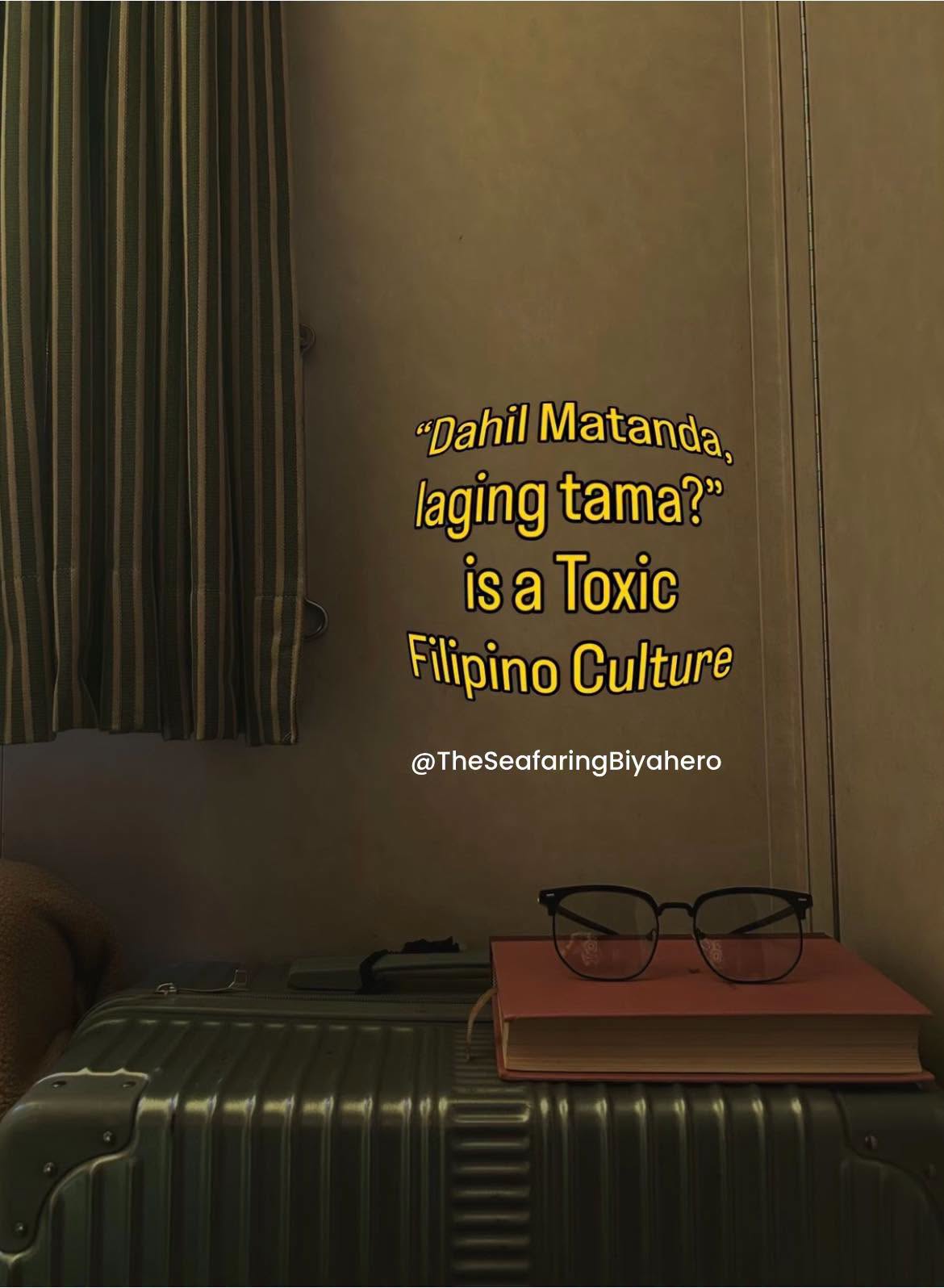
Yet, as the viral reflection from The Seafaring Byahero highlights, a beautiful cultural value becomes destructive when age is weaponized as a shield against truth and accountability.
Respect is foundational, but age does not automatically equal infallibility. Examining this cultural tension through the lens of maturity, psychology, and faith reveals how we can honor our elders without enabling emotional toxicity.
1. Growing Old vs. Growing Up: The Maturity Gap
Chronological age measures the passage of time; emotional and spiritual maturity measures the transformation of character.
-
Wisdom is Not Automatic: Gray hair is a sign of experience, but experience only leads to wisdom if a person reflects, acknowledges mistakes, and practices self-correction.
-
Age as a Defensive Shield: When an older individual faces legitimate feedback, the reflex is often to divert the issue away from the facts and focus entirely on tone: “Bakit ganyan ka makipag-usap?” Disagreement is quickly labeled as disrespect, shutting down healthy dialogue and forcing the younger person to shoulder all the blame.
2. The Biblical and Moral Balance of Respect
In Catholic moral teaching, the Fourth Commandment—“Honor your father and your mother”—is central to family life. However, Christian ethics also recognizes that honor must never be twisted into blind submission to injustice or falsehood.
-
Mutual Honor in the Household (Ephesians 6:1–4): While Scripture instructs children to obey and honor their parents in the Lord, Saint Paul immediately follows with a crucial counterbalance: “Fathers, do not provoke your children to anger, but bring them up with the training and instruction of the Lord.” Respect in the domestic church is a two-way street rooted in charity, not an authoritarian hierarchy.
-
Speaking the Truth in Love (Ephesians 4:15): Truth and respect are not enemies. Pointing out an error or setting a healthy boundary is not an act of pambabastos (rudeness), provided it is done with gentle, respectful speech.
3. Understanding Without Enabling: Compassion with Boundaries
As the original reflection wisely notes, elders who exhibit defensiveness are often not “bad people.” Many carry unresolved trauma, generational poverty wounds, or traditional conditioning where vulnerability was equated with weakness.
-
You Cannot Force Someone to Change: You cannot manage another person’s pride or emotional triggers; you can only control your own response.
-
Choose Peace Over Petty Battles: When an elder refuses to listen or twists disagreements into victimhood, arguing in circles only drains your spirit. Sometimes, calm silence, short de-escalating replies, and emotional distance are the healthiest ways to guard your peace.
4. Three Principles for Navigating Generational Tension
-
Separate Tone from Truth: When you need to address a difficult issue with an elder, maintain respectful language (gumamit ng magagalang na salita). By removing any accusation of disrespect in your delivery, the focus remains entirely on the truth of the issue.
-
Break the Generational Pattern: Commit to not repeating the cycle. When you interact with younger relatives, nieces, nephews, or subordinates, cultivate the humility to say: “Pasensya na, nagkamali ako.” True leadership listens.
-
Guard Your Peace with Charity: Forgive the shortcomings of older relatives who struggle with emotional maturity, but maintain clear personal boundaries. You can love someone deeply while refusing to let their unaddressed pride dictate your emotional well-being.
Respecting our elders is an enduring Christian duty, but true respect flourishes only in an atmosphere of truth, humility, and mutual love.
How do you handle difficult conversations with older family members while maintaining both respect and your personal boundaries? Share your insights below!